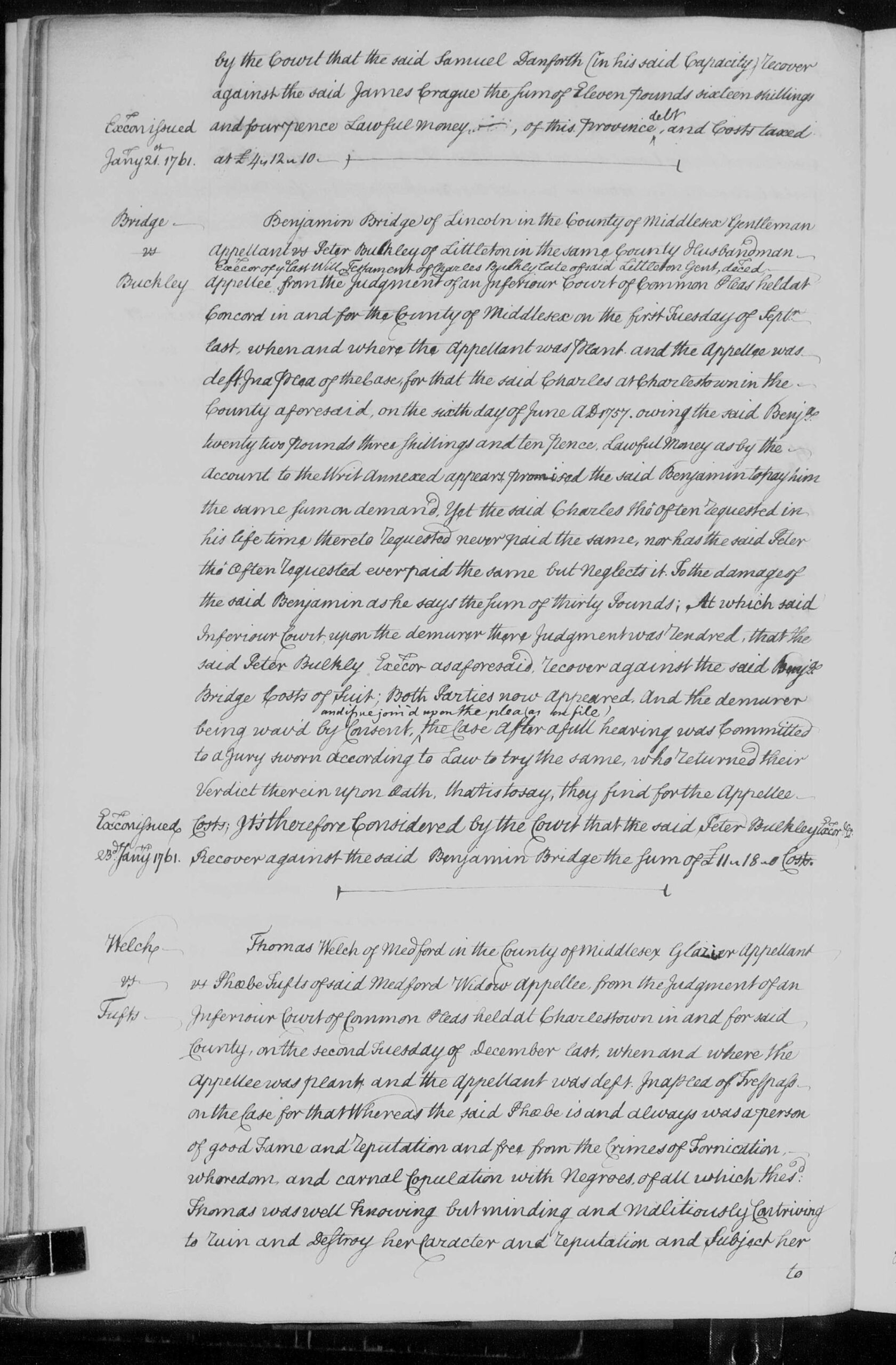
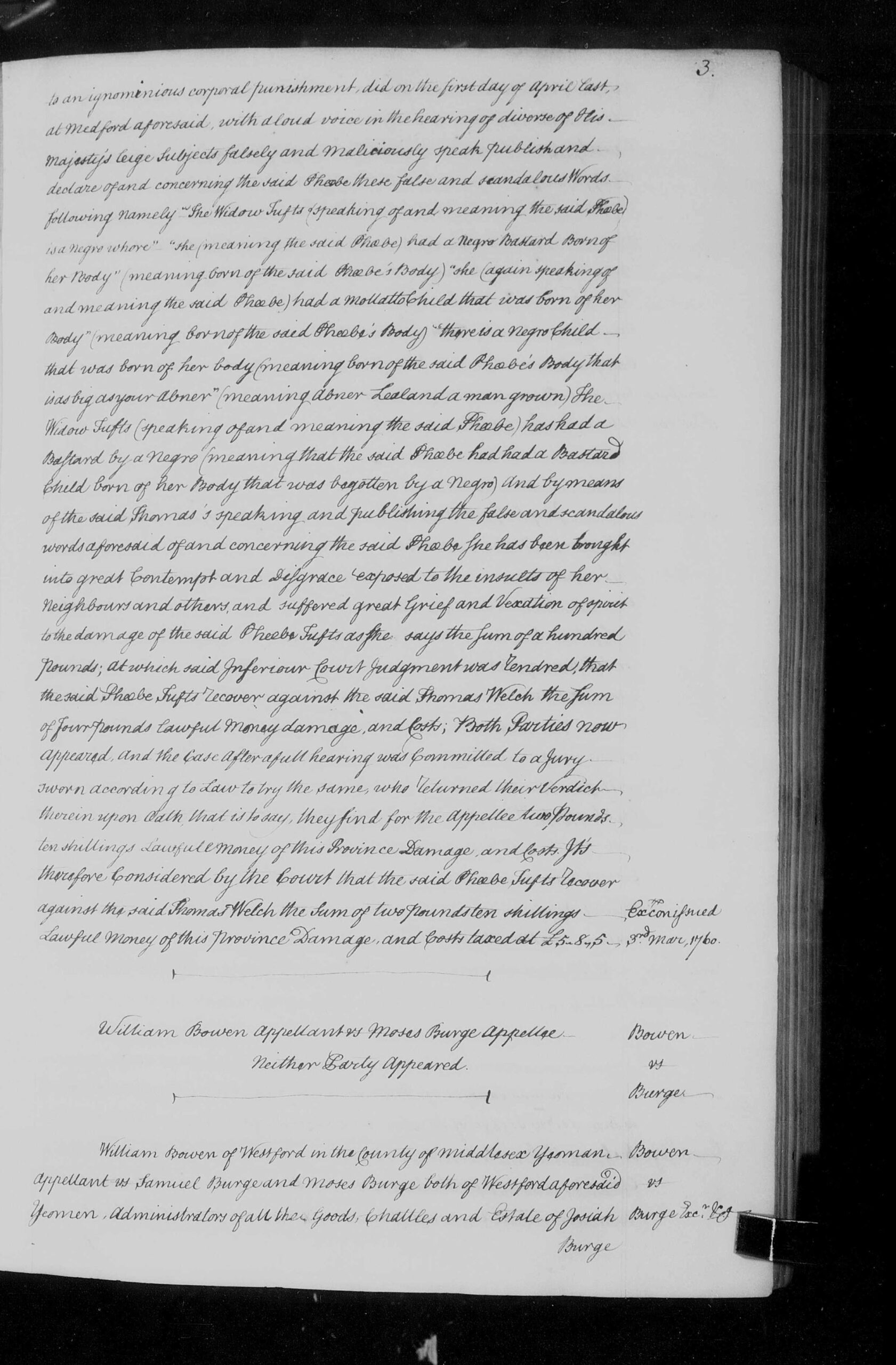
The case is an appeal heard before the Massachusetts Superior Court of Judicature, the highest court in Massachusetts prior to the American Revolution. The case originated in the Charlestown Inferior Court when Phoebe Tufts sued Thomas Welch for slander and defamation. In the first lawsuit, Phoebe Tufts won her case and the jury awarded her four pounds lawful money plus court costs (which would go to pay salaries for judges, clerk plus expenses of jury and witnesses). Welch appealed this decision to the SCJ, which confirmed the decision but lowered the penalty paid to Tufts to two pounds, ten shillings, roughly a 35% decrease in what she received. However, Welch then had to pay court costs for the second trial as well. In total, Welch paid 7 pounds 18 shillings and five pence (much more than the 4 pounds he might have paid after the county case). Key takeaways: the plaintiff paid nearly twice what he would have paid if he had stopped at one trial (possibly a signal not to waste the court’s time with silly appeals); parties like Welch probably concluded that trials in this period were too expensive and took too long; and lastly, that women of the eighteenth century heard insulting language that focused upon their chastity, while adding racial innuendos.
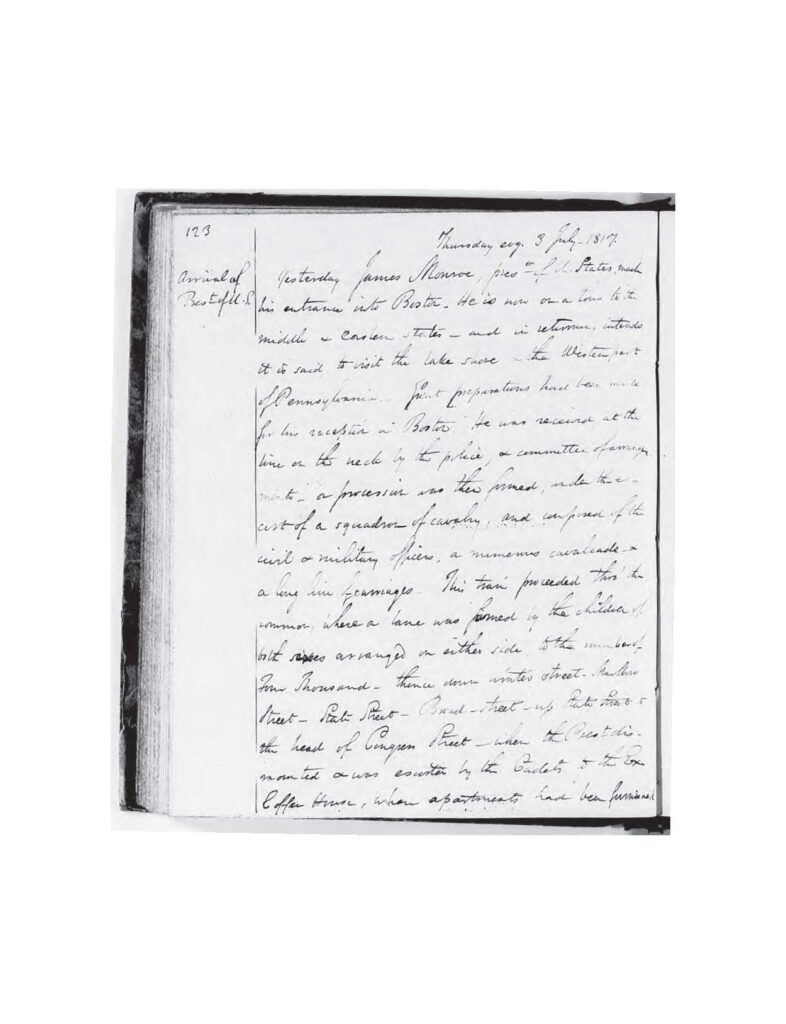
July, 1817: The ‘Era of Good Feelings’ begins in Boston
These entries from John Gallison’s diaries contain a few updates on the financial affairs of Gallison’s Aunt Scott. Once known as Mrs. John...