Charles Coates Interview Notes (Viola Muse Digital Edition)

  1. 250th Gallery
  2. Charles Coates Interview Notes (Viola Muse Digital Edition)

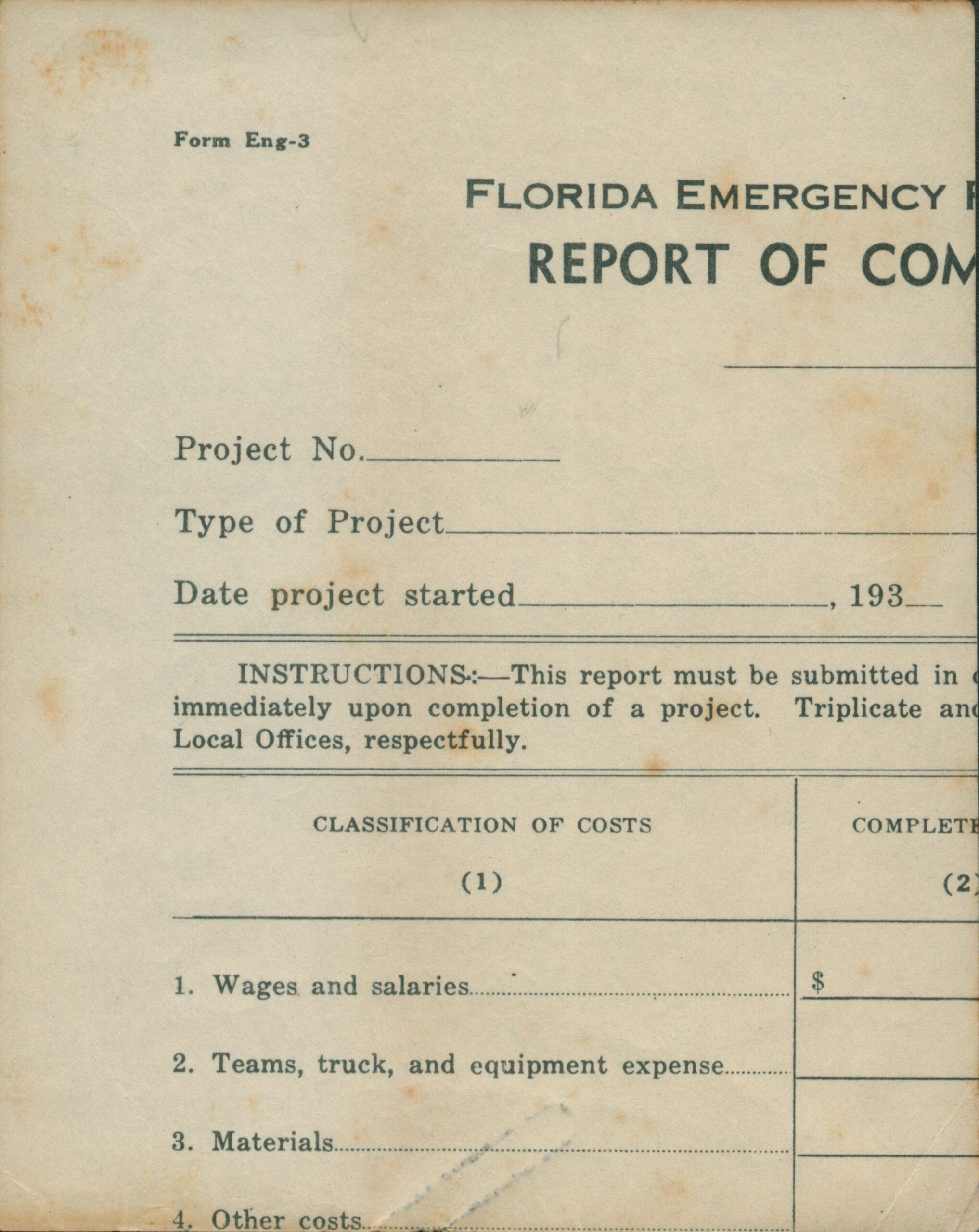
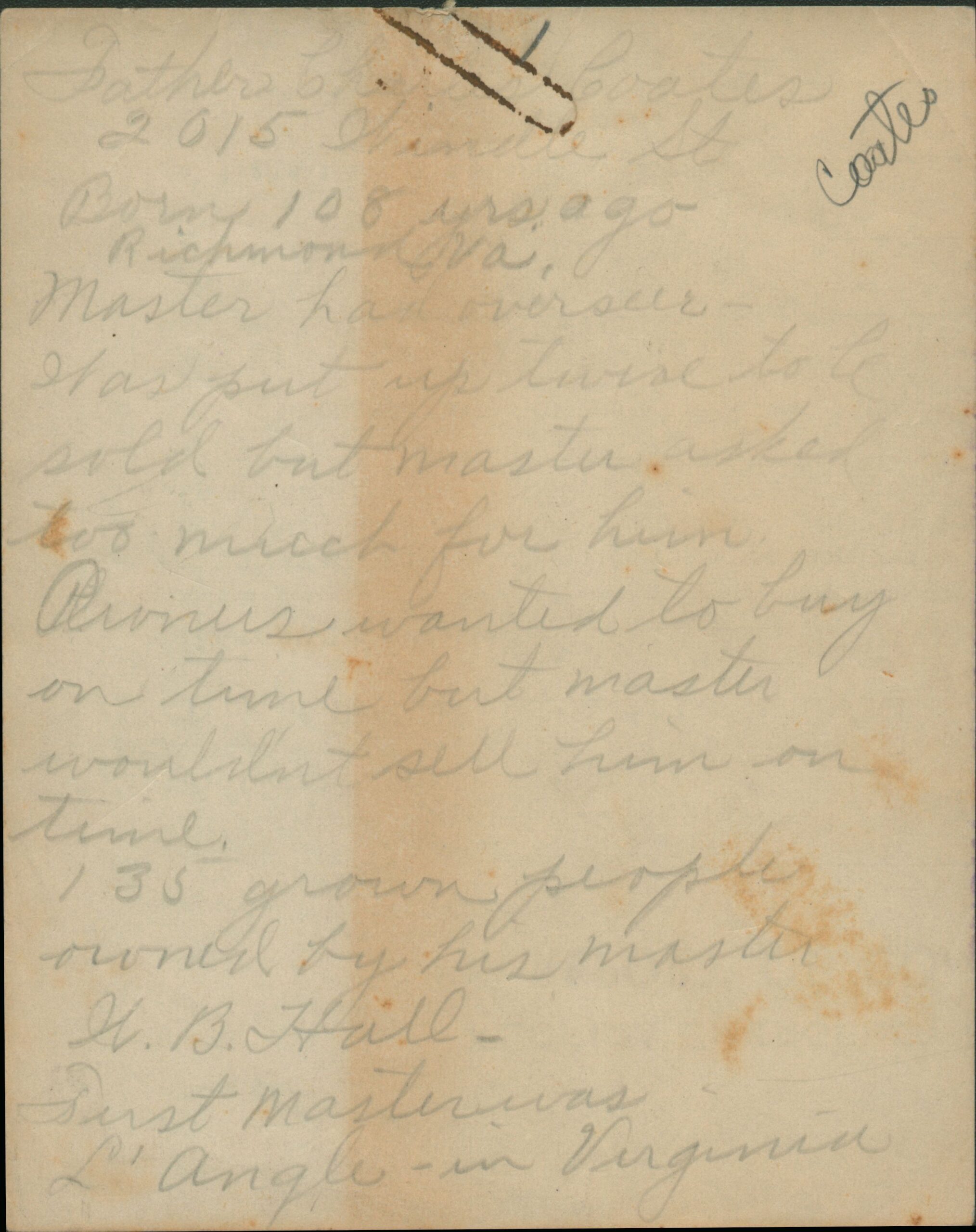
Viola B. Muse (1898-1981) worked from 1936 through 1939 as an interviewer and writer in the Negro Writers Unit of the Florida Federal Writers Project in Jacksonville, Florida. Muse and the other writers in the Negro Writers Unit, including Zora Neale Hurston, attempted to document the achievements and folkways of African-American communities in Florida, and in Jacksonville specifically. During the years in which she worked for the Federal Writers Project, Muse traveled around LaVilla, Durkeeville, Brooklyn, and other Black neighborhoods in Jacksonville to interview everyday citizens. She visited neighbors’ homes and took notes on the paintings that hung on their living room walls; she walked through segregated Black schools and collected poems and drawings made by precocious pupils; she interviewed formerly enslaved Jacksonvillians about their experiences under slavery; she dropped into hickory furniture workshops to inquire about the skills of local craftsmen. Muse jotted down some of her notes on the back of cut-up Depression-era job relief forms, paraphrasing the stories her interview subjects relayed and recording her own detailed observations about these people, their homes, and their workplaces. Very little of the information that Muse collected ever saw the light of publication. This document contains the notes that Muse made during her interview with Charles Coates, aged 108, a long-time resident of Jacksonville. The interview was conducted on December 3, 1936, at the home of Coates and his wife Irene, also interviewed by Muse on that same occasion. The notes in this document were subsequently used in the creation of the published narrative about Charles Coates, found on pages 65-73 of Works Progress Administration Federal Writers’ Project, Slave Narratives, vol. 3.

Read More
Document
Information

Father Charles Coates.

2015 Windle Street.

Born 108 years ago.

Richmond, Virginia.

Master had overseer.

Was put up twice to be sold, but master asked too much for him.

Owners wanted to buy on time, but master wouldn't sell him on time.

135 grown people owned by his master, W.B. Hall.

First master was L'Angle in Virginia.

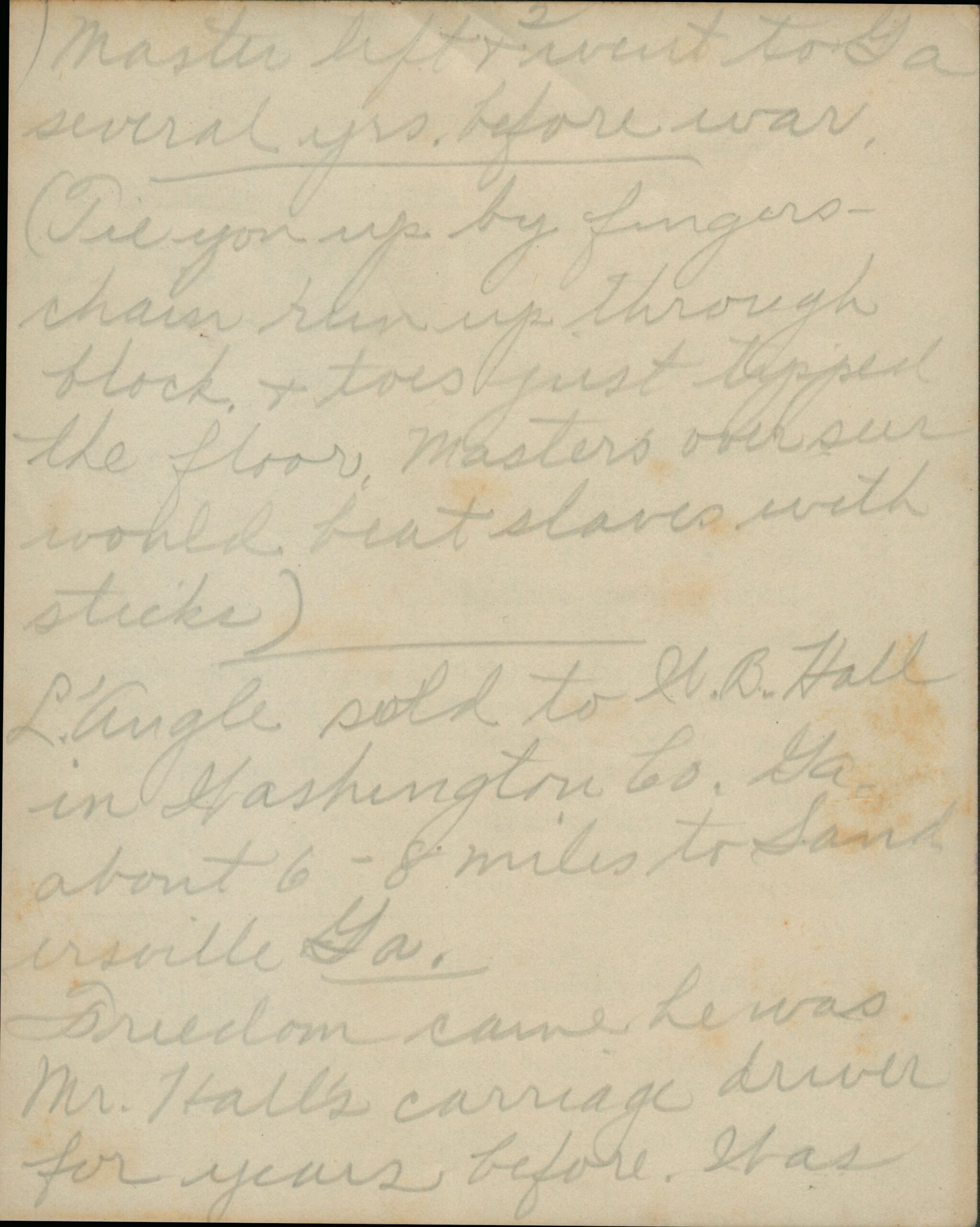
Master left and went to Georgia several years before war.

(Tie you up by fingers, chain run up through block and toes just tipped the floor. Master'soverseer would beat slaves with sticks.)

L'Angle sold to W.B. Hall in Washington County, Georgia, about 6–8 miles to Sandersville,Georgia.

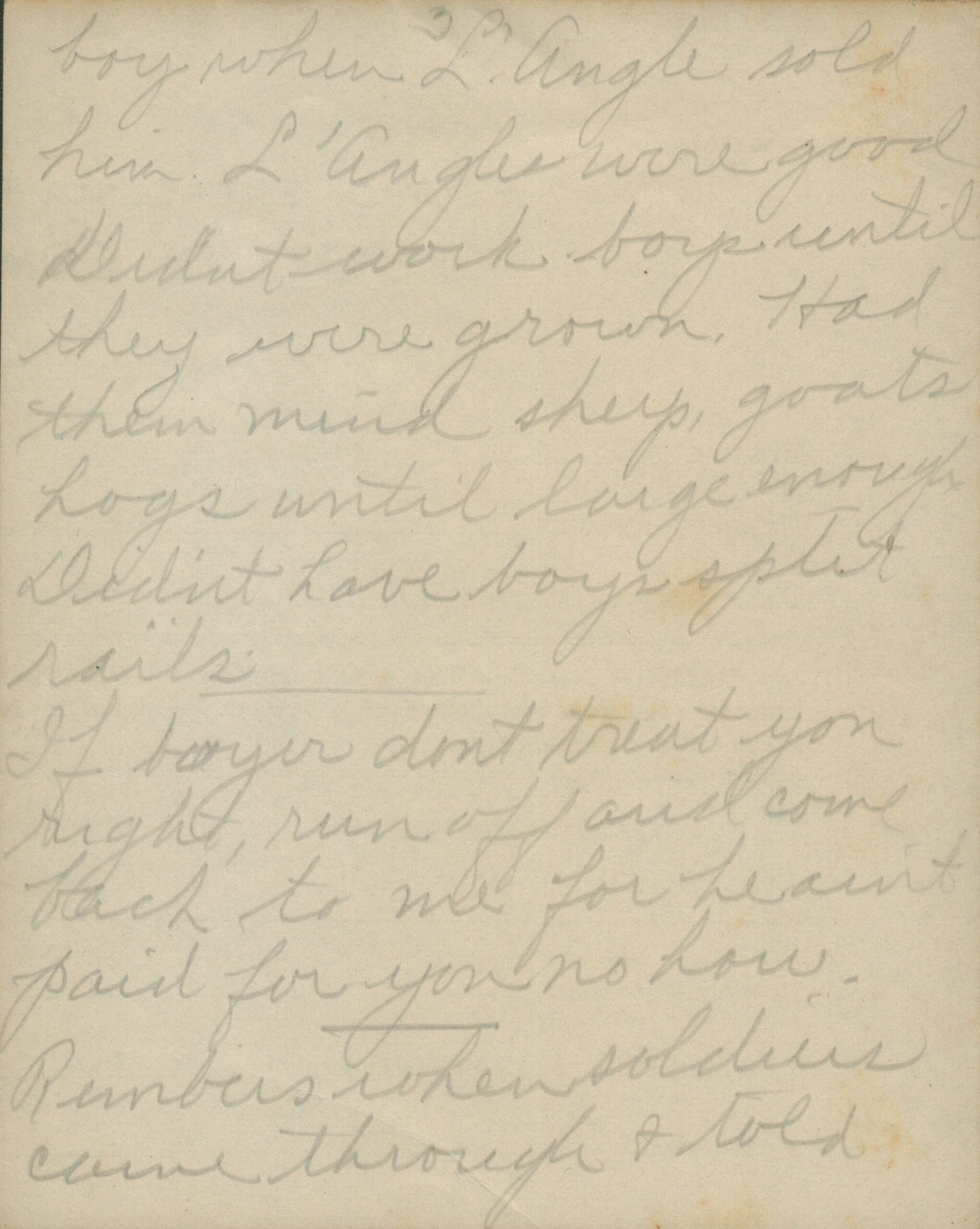
Freedom came. He was Mr. Hall's carriage driver for years before. Was boy when L'Angle soldhim. L'Angles were good. Didn't work boys until they were grown. Had them mind sheep, goats, hogs until large enough. Didn't have boys split rails.

"If buyer don't treat you right, run off and come back to me, for he ain't paid for you no how."

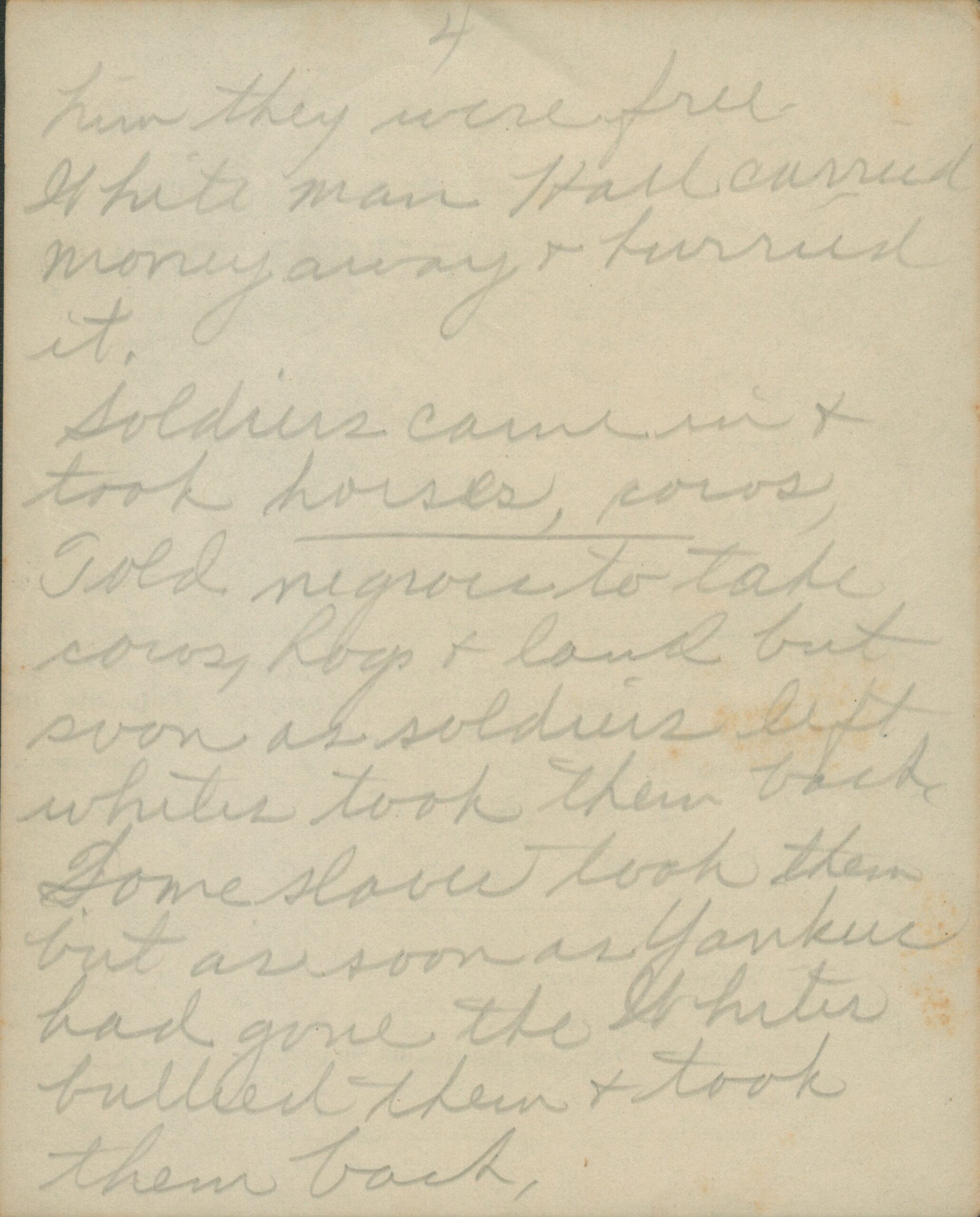
Rembers when soldiers came through and told him they were free. White man Hall carriedmoney away and buried it.

Soldiers came in and took horses, cows.

Told Negroes to take cows, hogs, and land, but soon as soldiers left, whites took them back.Some slaves took them, but as soon as Yankees had gone, the whites bullied them and tookthem back.

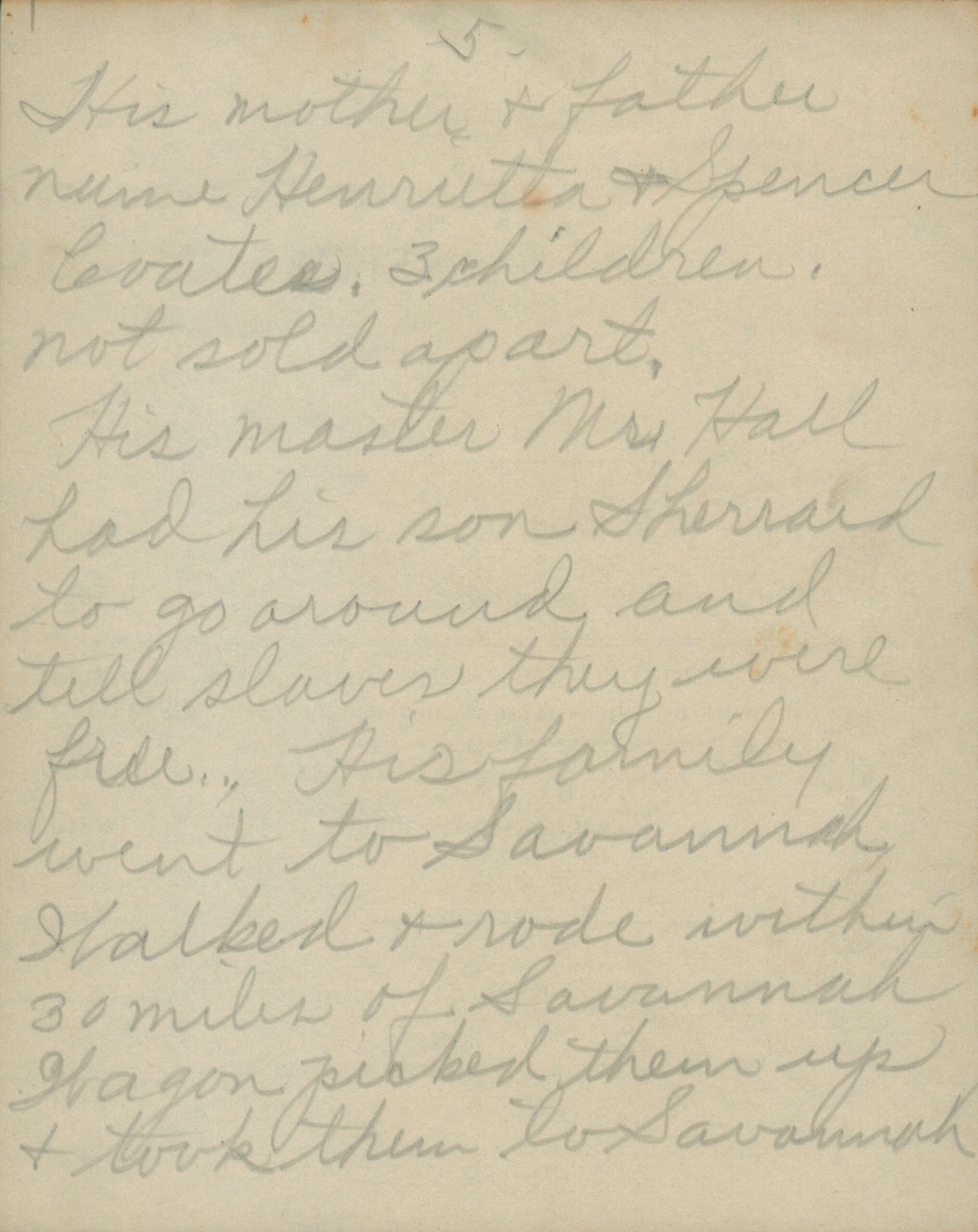
His mother and father, named Henrietta and Spencer Coates. Three children. Not sold apart.His master, Mr. Hall, had his son Sherrard to go around and tell slaves they were free. His family went to Savannah, walked and rode within thirty miles of Savannah. Wagon picked them up and took them to Savannah.

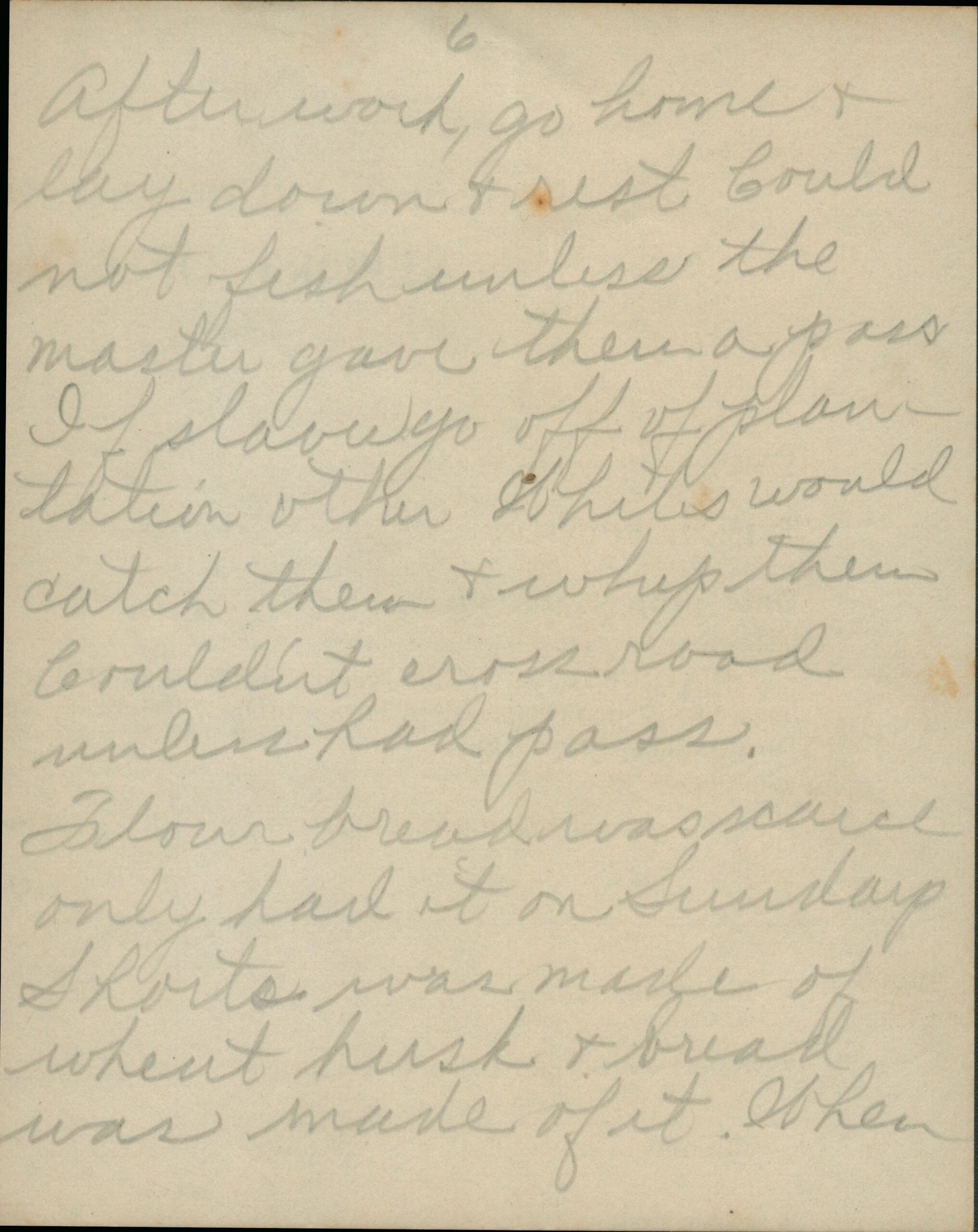
After work, go home and lay down and rest. Could not fish unless the master gave them a pass. If slaves go off plantation, then other whites would catch them and whip them. Couldn't cross road unless had pass.

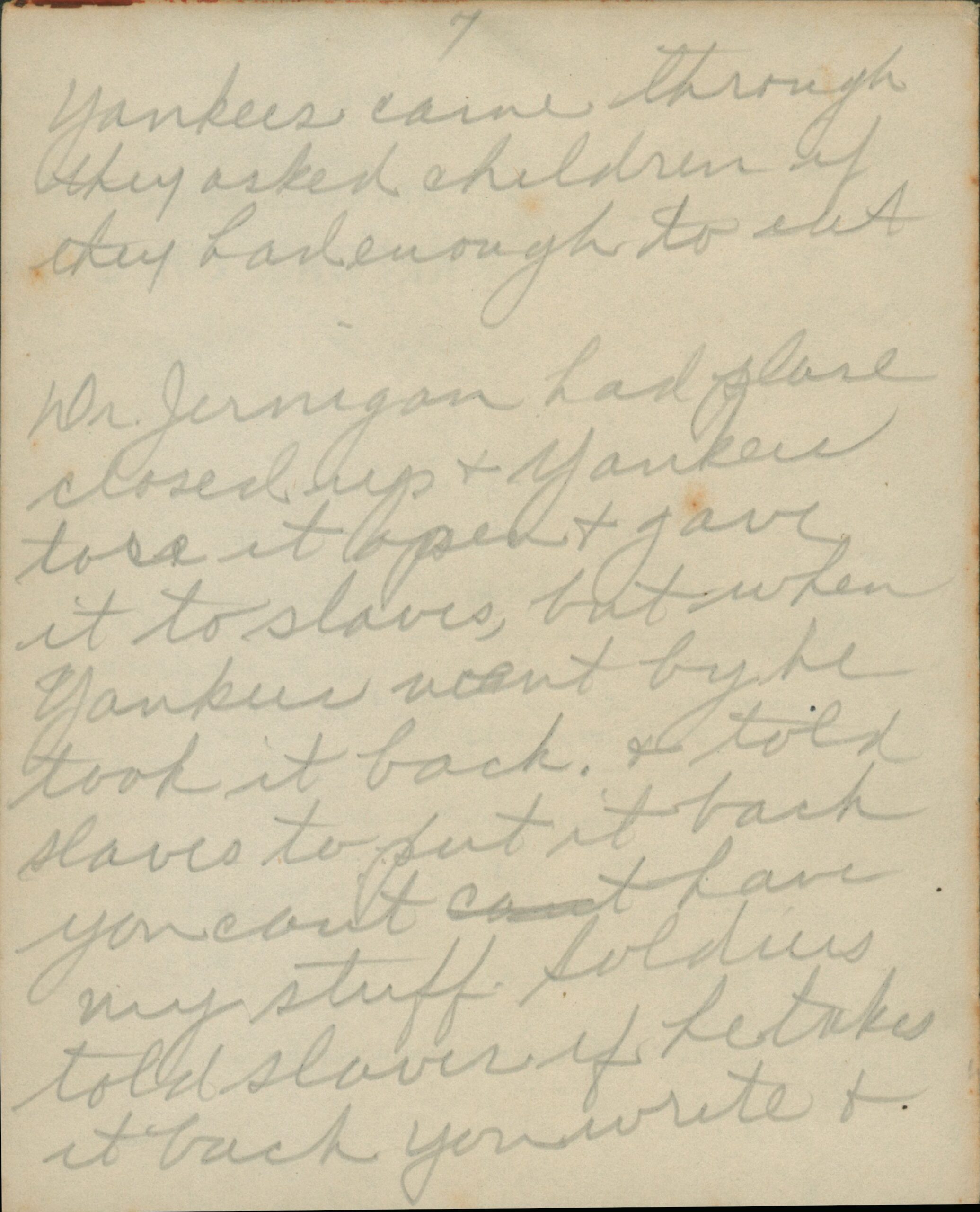
Flour bread was scarce, only had it on Sundays. Shorts was made of wheat husk and breadwas made of it. When Yankees came through, they asked children if they had enough to eat.

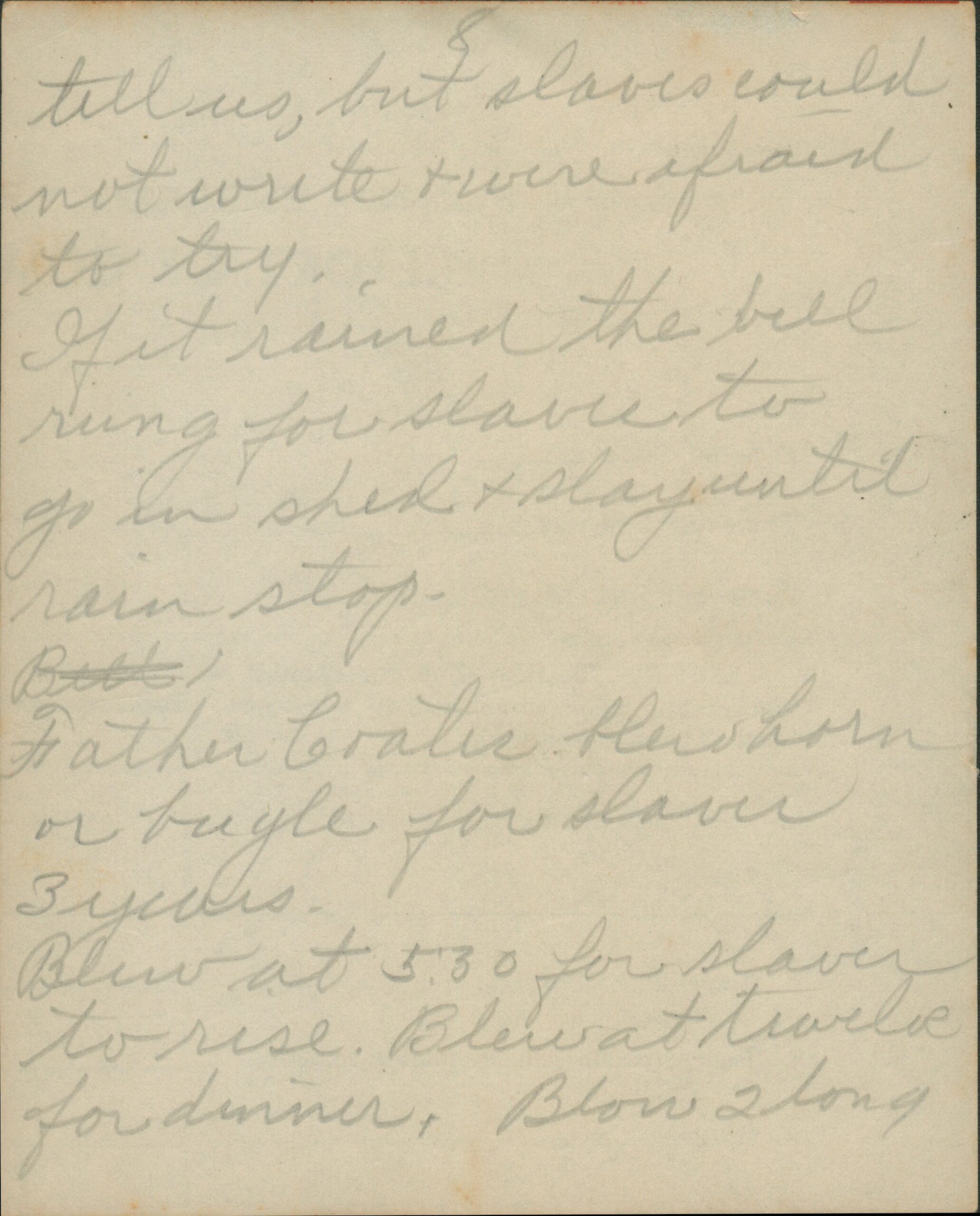
Mr. Jernigan had place closed up, and Yankees tore it open and gave it to slaves, but whenYankees went by, he took it back, and told slaves to put it back. "You can't have my stuff."Soldiers told slaves, "If he takes it back, you write and tell us," but slaves could not write andwere afraid to try.

If it rained, the bell rung for slaves to go in shed and stay until rain stop.

Father Coates blew horn or bugle for slaves three years.

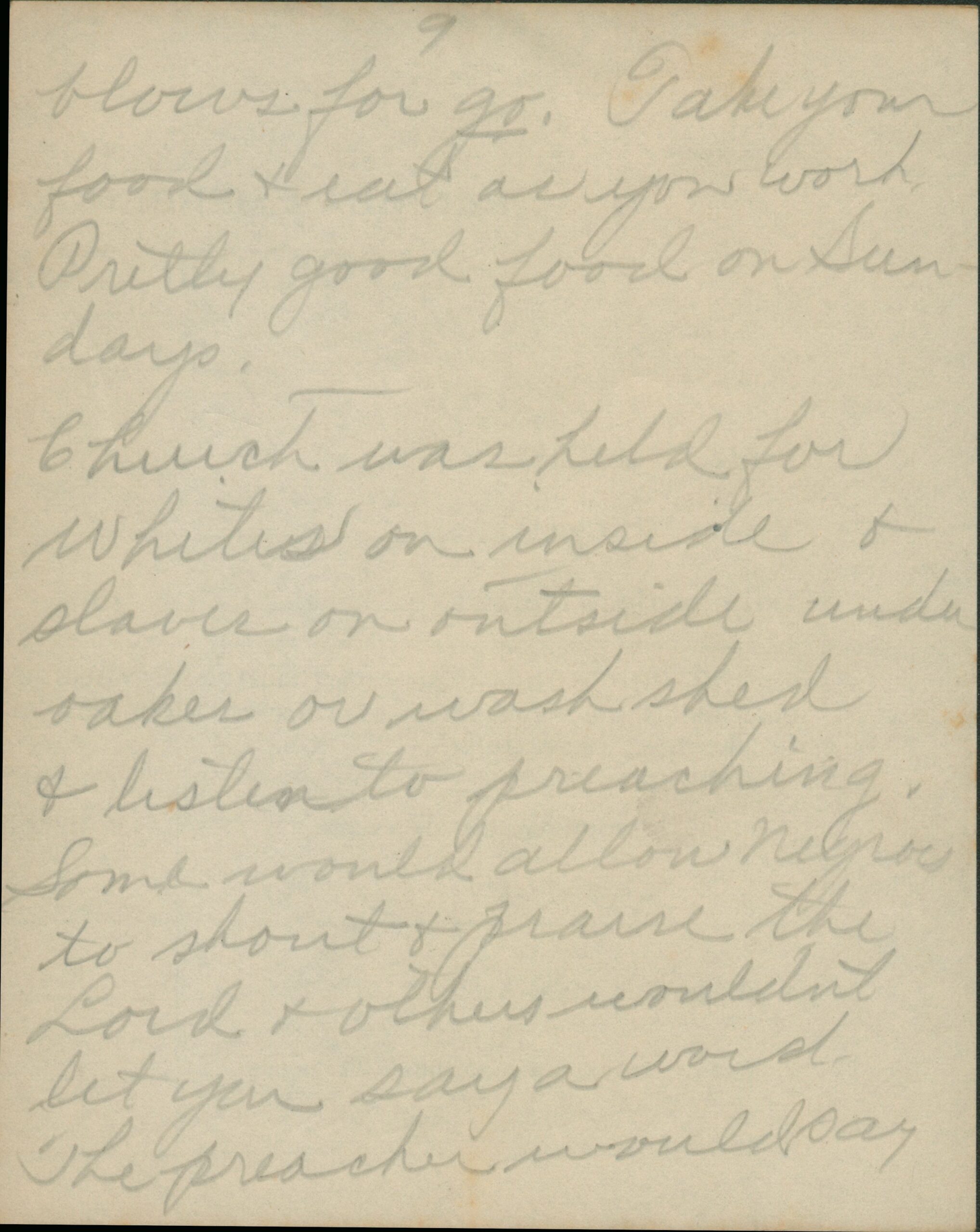
Blew at 5:30 for slaves to rise. Blew at twelve for dinner. Blow two long blows for, "Go, takeyour food and eat as you work." Pretty good food on Sundays.

Church was held for whites on inside and slaves on outside under oaks or wash shed andlisten to preaching. Some would allow Negroes to shout and praise the Lord, and others wouldn't let you say a word. The preacher would say, "Don't steal, don't lie, don't kill, but whenyou go to the field, pull up all grass and weeds out of the corn, and the master will think a heapof you."

Some of them would never go out into field to see, because they knew the niggers had done their work well.

Punish them by putting them in room two or three days without food or water.

Slave named Sambo said he could build a thing so slaves could not hollow so when they were whipped. So he built a stock to put head in and fit tight around neck, lay body across barrel,whip him. Sambo was first to be put in it, and when he was removed from it, he was dead.

Had whips made of leather with holes in it, every lick a whelp was made. Cat–a–nine–taleswere used, and every lick made nine whelps.

Women in family way were whipped same as other people. Stripped naked, hung up by thumbs, and whipped like a dog.

Sunday clothes were ausenbur cloth. Long shirts on men and boys, and that's all they had on.

Cloth was woven on place, ginned cotton and weaved cloth. Old women were made to do thiswork.

Worn this shirt until eighteen years old. Barefooted. Didn't know what shoes were. Eighteenyears old before he ever wore pants.

Winter time wore same thing, and was "kept moving so fast you didn't have time to get cold"(laugh).

Master's son went to Army, and fought and got killed.

Master's (Mrs. Jones) mother, Miss Gussie, Miss Lizzie, Sherard Hall.

Julius was son who went to war and was killed.

Mr. Coates was in the home house.

There was a slave woman who was strong and knew her work and did it. She could grab up a big bag of guana. She could tote two at a time. Was much of a woman. She saw overseer whip a nigger and said, "The day he ever hits me, he or I will die." One day the overseer who heard her say this hit her with a whip. She was hoeing in the field, and took her hoe and struckhim. He fell off horse, and she chopped his head off, chopped him up, killed his horse, andwent to master and told him, "I've killed the overseer." Master said, "What?" "Yes, I've killed theoverseer." He said, "You see that house over there, you go take it. You are free, and if the old missus asks you to do anything for her you, do it if you want to."

A woman in Petersburg, Virginia, owned slaves and thought she was doing something smart,so she whipped a slave woman in the presence of President Abe Lincoln's wife. Mrs. Lincolnwas disgusted, and went back home and told Mr. Lincoln, and soon after, the war began.

Married three years after freedom. At first big meeting, a boy told him about his sister, and had tintype made, and sent it to his sister, and brought sister's picture in exchange. He aftermarried her. He fell in love at once and coated about three months. Only lived four days after.

She had consumption, and he didn't know it. He had her body put up in alcohol, and burriedher like that.

A doctor and school teacher told him how to put her away in alcohol. Cost him $160.00. Shewas in glass coffin, and another coffin on outside, and he used to go every other day to look at her. Vault was dug and built in

ground with a part above ground, and a glass window left open so you could see head, andafter he like to have gone crazy, they cemented it up.

Married present wife about sixty years.

Institution(s):

University of North FloridaJacksonville History CenterNational Endowment for the Humanities

Editor(s):

Clayton McCarl

Laura Heffernan

Tru Leverette-Hall

Source Note

Jacksonville Historical Society, Viola Muse Collection, Folder 12: Slavery, Item 6

Editorial Process & Document History

This document is held by the Jacksonville History Center as part of the Viola Muse Collection. The University of North Florida Digital Humanities Institute, in partnership with the Jacksonville History Center (and with the support of the National Endowment of the Humanities) published the document as part of The Viola Muse Digital Edition. Melinda Peacock scanned the document; Clayton McCarl transcribed the document and encoded it.

Additional Details

Some of the information in these notes does not appear in the published Charles Coates narrative, however, but rather in that which corresponds to Irene Coates, found in that same volume, pages 74-79, and included in the Viola Muse Digital Edition as Irene Coates Narrative (4 of 4).

Most notably, the anecdotes about a slave woman’s killing of an overseer and Mrs. Lincoln’s reaction to a slave being beaten, found on pages 15-18 of this document, appear on pages 75-76 of the published Irene Coates narrative. Although Charles appears to be the source, the two stories are presented in Slave Narratives as having been related to Muse by Irene:

Although Irene was just about six years old when the Civil War ended, she has vivid recollection of happenings during slavery. Some of the incidents which happened were told her by her slave associates after slavery ended and some of them she remembers herself.

Two incidents which she considers caused respect for slaves by their masters and finally the Emancipation by Abraham Lincoln she tells in this order.

The first event tells of a young, strong healthy Negro woman who knew her work and did it well. ‘She would grab up two bags of guana (fertiliser) and tote ’em at one time,’ said Irene, and was never found shirking her work. The overseer on the plantation, was very hard on the slaves and practiced striking them across the back with a whip when he wanted to spur them on to do more work.

Irene says, one day a crowd of women were hoeing in the field and the overseer rode along and struck one of the women across the back with the whip, and the one nearest her spoke and said that if he ever struck her like that, it would be the day he or she should die. The overseer heard the remark and the first opportunity he got, he rode by the woman and struck her with the whip and started to ride on. The woman was hoeing at the time, she whirled around, struck the overseer on his head with the hoe, knocking him from his horse, she then pounced upon him and chopped his head off. She went mad for a few seconds and proceeded to chop and mutilate his body; that done to her satisfaction, she then killed his horse. She then calmly went to tell the master of the murder, saying “I’ve done killed de overseer.” the master replied-“Do you mean to say you’ve killed the overseer?” she answered yes, and that she had killed the horse also. Without hesitating, the master pointing to one of his small cabins on the plantation said- “You see that house over there?” she answered yes- at the same time looking- “Well said he, take all your belongings and move into that house and you are free from this day and if the mistress wants you to do anything for her, do it if you want to.” Irene related with much warmth the effect that incident had upon the future treatment of the slaves.

The other incident occurred in Virginia. It was upon an occasion when Mrs. Abraham Lincoln was visiting in Richmond. A woman slaveowner had one of her slaves whipped in the presence of Mrs. Lincoln. It was easily noticed that the woman was an expectant mother. Mrs. Lincoln was horrified at the situation and expressed herself as being so, saying that she was going to tell the President as soon as she returned to the White House. Whether this incident had any bearing upon Mr. Lincoln’s actions or not, those slaves who were present and Irene says that they all believed it to be the beginning of the President’s activities to end slavery. (Works Progress Administration Federal Writers’ Project, vol. III, 75-77)

In addition, the published Irene Coates narrative appears to include information that Charles gives on page 13 about Sunday clothes being made of ausenbur cloth and the role of elderly women in making that cloth:

Besides these incidents, Irene remembers that women who were not strong and robust were given such work as sewing, weaving and minding babies. The cloth from which the Sunday clothes of the slaves was made was called ausenburg and the slave women were very proud of this. The older women were required to do most of the weaving of cloth and making shirts for the male slaves. (77)

The published Irene Coates narrative also echoes a detail that Charles Coates recounts on page 8 of these notes:

Irene recalls the practice of blowing a horn whenever a sudden rain came. The overseer had a certain Negro to blow three times and if shelter could be found, the slaves were expected to seek it until the rain ceased. (77)

The published Irene Coates narrative adds information not found in the Charles Coates interview notes, however:

The master had sheds built at intervals on the plantation. These accomodated a goodly number; if no shed was available the slaves stood under trees. If neither was handy and the slaves got wet, they could not go to the cabins to change clothes for fear of losing time from work. This was often the case; she says that slaves were more neglected than the cattle. (78)

Lastly, the published Irene Coates narrative also appears to repeat details from page 12 of the Charles Coates interview notes:

Another custom which impressed the child-mind of Irene was the tieing [sic] of slaves by their thumbs to a tree limb and whipping them. Women and young girls were treated the same as were men. (78)

Welch v. Tufts lawsuit (1760)

The case is an appeal heard before the Massachusetts Superior Court of Judicature, the highest court in Massachusetts prior to the American...

The Association for Documentary Editing

The ADE brings historical documents to life by helping editors preserve, interpret, and share important records from the past with the public.